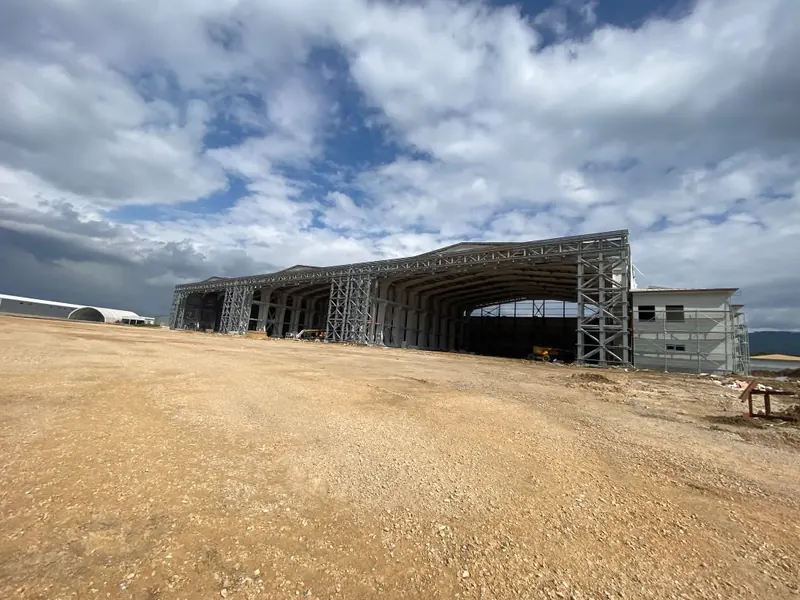
Fast construction, early production
Steel members are fabricated in the workshop while the site is prepared. On site they are connected by bolting or welding, which removes formwork and curing time. Your facility starts operating sooner.
High strength, low weight
Steel has a high strength-to-weight ratio. A lighter structure reduces the load on foundations and can help reduce foundation cost on weak soils.
Wide spans, free layout
Column-free spans give freedom for production lines, forklift traffic and racking. Trusses and portal frames cross wide spans economically.
Seismic behaviour
Steel is ductile: after yielding it deforms without breaking and dissipates energy. Because the building is light, seismic forces can also be lower. This advantage is only realised with a structural design that complies with the current Turkish Building Seismic Code, suitable materials and well-detailed connections.
Flexibility and recycling
A steel building can be extended later or dismantled and moved. Steel can be recycled repeatedly without losing quality, so it keeps its value at the end of the building’s life.
Steel or reinforced concrete?
The right choice depends on the purpose of the project, the budget and the ground. The table compares the two systems.
| Criterion | Steel construction | Reinforced concrete |
|---|---|---|
| Construction time | Usually shorter thanks to prefabrication | Needs formwork, reinforcement and curing |
| Weight | Light | Heavy |
| Wide spans | Easy and economical | Needs extra measures and cost |
| Extension / dismantling | Possible | Difficult |
| Fire | Protected with coating or fire-resistant paint | Naturally more resistant |
| Corrosion | Needs paint or galvanising | Usually less maintenance |
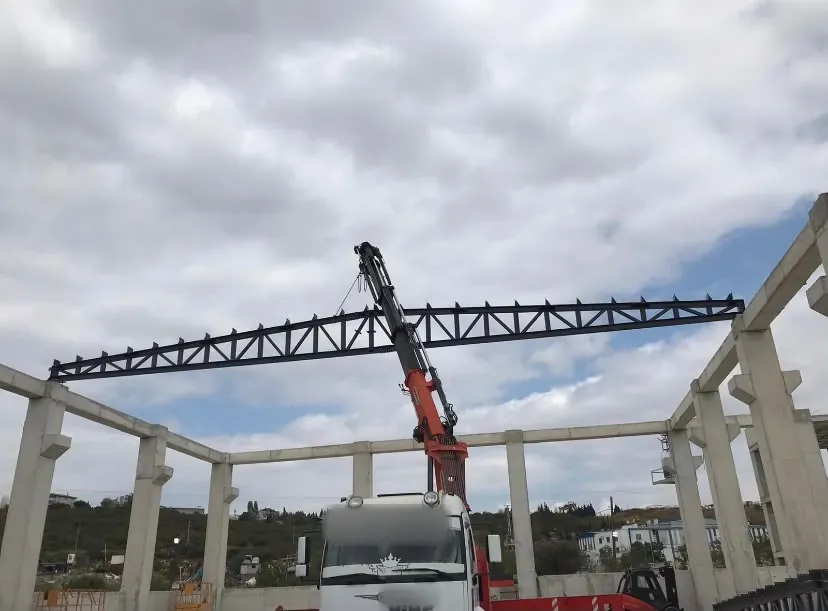
Frequently asked questions
Is steel construction more expensive than reinforced concrete?
It depends on the project. Steel material may look more expensive, but shorter site time, lighter foundations and wide spans can balance the total cost. A project-specific comparison is needed.
Does steel rust?
Unprotected steel does. That is why surface preparation, primer and paint or hot-dip galvanising are applied. With the right coating, steel structures last for many years.
How does steel behave in a fire?
Steel loses strength at high temperatures, so it is protected with fire-resistant paint, cladding or insulation. The required fire resistance depends on the regulations and the use of the building.